

A Lake that Remembers a River
At
first light, a wetland does not announce its importance. The water lies
quietly, birds move along the margins, fish disappear beneath the surface, and
fields begin another day around it. Yet places like Morjat Baor carry a much
larger story one written by rivers, seasons, wildlife and generations of
people.
Morjat
Baor is an oxbow-shaped freshwater wetland in the Ganges floodplain of
southwestern Bangladesh. Its landscape extends across Patibila and Morjat Baor
mouzas of Chaugacha and Kaliganj upazilas, with the baor and its surrounding
settlements, agriculture and homestead vegetation forming one connected living
system.
The
baor is closely associated with the Bhairab River and represents the kind of
wetland created by the restless history of river channels. Over time, a former
river course can become separated from the main channel, leaving behind a
waterbody that still carries the ecological memory of the river that shaped it.
The Living Wealth Beneath the Surface
The
beauty of Morjat Baor is not only in its water and scenery. Look closer, and an
entire living world begins to appear.
Beneath
the surface, the baor supports a rich fish community. Forty-eight fish species
from 15 families have been recorded here. Among them are species that are
important to local fisheries as well as species of conservation concern. The
fish move through a changing underwater landscape of open water, aquatic
vegetation and shallow habitats, forming an essential part of the wetland's
ecological web.
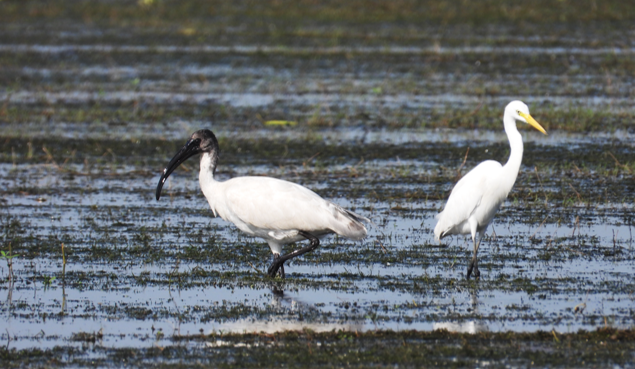
Above
the water, another story unfolds. Morjat Baor is home to an impressive
diversity of birds, with 101 species recorded from 48 families. Some are
closely associated with wetlands, while others use the surrounding vegetation
and open water as feeding and resting places. Through the seasons, the movement
and presence of birds add another rhythm to the baor.
A Garden Floating on Water
The
margins of Morjat Baor are equally alive. Water lilies, water hyacinth, water
lettuce, taro and water spinach are among the aquatic plants found in the
wetland. On land, the surrounding landscape supports a variety of herbs, shrubs
and other vegetation. Together, these plants provide shelter, food and breeding
spaces for wildlife while helping to connect the water with the land around it.
A
wetland is therefore much more than a body of water. Every patch of vegetation,
every shallow edge and every quiet corner can have a role. Fish find shelter
among plants. Birds search the margins for food. Insects and other small
organisms become part of the food web. The shoreline becomes a meeting place
between aquatic and terrestrial life.
Where Nature Meets Everyday Life
For the people living around Morjat Baor, this landscape is
not simply a beautiful natural setting. It is part of everyday life.
Fishing connects many households directly with the baor.
Boats, nets, fish and seasonal changes in water are familiar parts of the local
landscape. Agriculture, homesteads and other activities around the wetland are
also closely connected to its condition. In this way, the story of Morjat Baor
is inseparable from the people who live beside it.
This
connection also offers hope. A large majority of surveyed community members
expressed support for conservation, and many indicated a willingness to
participate in activities that protect and care for the wetland. Their
knowledge, experience and participation can become an important part of the
baor's future.
When a Wetland Comes Under Pressure
Like
many wetlands, Morjat Baor is changing. Beneath its peaceful surface, a number
of pressures are gradually reshaping the landscape. Silt settles into the
waterbody, reducing depth and changing aquatic habitats, while increasing
fishing pressure can affect fish populations. Fine-mesh and illegal fishing
gears may also capture juvenile and non-target fish, putting additional
pressure on the wetland’s natural resources.
The skies above the baor face their own challenges. Bird
hunting and the use of illegal nets can threaten the diverse birdlife that
depends on Morjat Baor for feeding, resting and shelter. For a wetland visited
by so many species, the loss of even a small part of this habitat can disturb
the delicate relationship between water, vegetation and wildlife.
Along
the shoreline, sand excavation can alter the character of the wetland and
disturb its natural banks and surrounding habitats. Encroachment can further
reduce available space for wetland vegetation and wildlife. Agricultural runoff
and domestic waste may also find their way into the water, affecting the
quality of the environment that supports fish, birds and aquatic life.
Dense
growth of water hyacinth presents another challenge. When it spreads
extensively, it can interfere with navigation and water circulation and change
conditions within the wetland. At the same time, changing rainfall, temperature
and seasonal water levels add another layer of uncertainty to an already
dynamic ecosystem.
These
pressures are closely connected. What happens along the shoreline can
eventually reach the water; what happens in the water can affect fish and other
wildlife; and changes in the wetland can ultimately affect the people whose
lives are connected to it. Protecting Morjat Baor therefore means protecting
the entire living landscape not only the water, but also its shores, skies,
vegetation, wildlife and the communities around it.
A Future Worth Protecting
The
future of Morjat Baor does not have to be a story of loss. Wetlands can recover
when people understand their value and work together to protect them.
Restoring
degraded aquatic habitats, protecting shoreline vegetation, supporting
sustainable fishing, reducing pollution, safeguarding birds and strengthening
community participation can all help the baor remain productive and resilient.
At the same time, livelihood opportunities outside direct dependence on the
wetland can help reduce pressure on its natural resources.
The most important lesson is simple: conservation and human
well-being do not have to stand on opposite sides. A healthy baor can support
fish, birds, plants and people together.
The Story Continues
Morjat
Baor is a living landscape. Its appearance changes with the seasons, its water
rises and falls, fish move through its habitats, plants spread and recede, and
birds arrive, depart and return. The people around it also adapts to these
changes, carrying generations of knowledge about the water and its resources.
Perhaps
that is what makes Morjat Baor so special. It is not merely a lake left behind
by a river. It is a place where the memory of a river continues to shape life.
If
the water is protected, if its biodiversity is valued, and if the people who
depend on it are part of its future, Morjat Baor can continue to tell its story
for generations to come—a story written in water, wings, green leaves and the
quiet movement of people across the wetland.
Share this page via